Identity security leader who builds IAM programs for people and AI agents. I write about identity architecture, IGA and non-human identity.

Identity Security · IAM · AI Governance
Identity Security · IAM · AI Governance
Identity security leader who builds IAM programs for people and AI agents. I write about identity architecture, IGA and non-human identity.
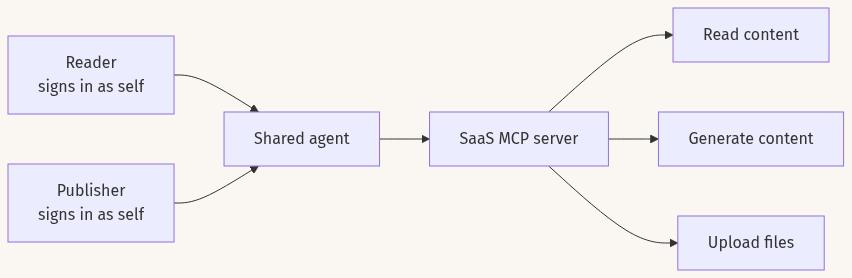
Per-user OAuth answers who the user is. It doesn’t answer which tools they should get through the agent. Treat each tool as an entitlement, requested, approved, reviewed, and revoked like any other access.
SSO onboarding is slow because of the queue, not the tooling. A working prototype shows the routine path does not need an administrator, and the one checkpoint that should stay human.
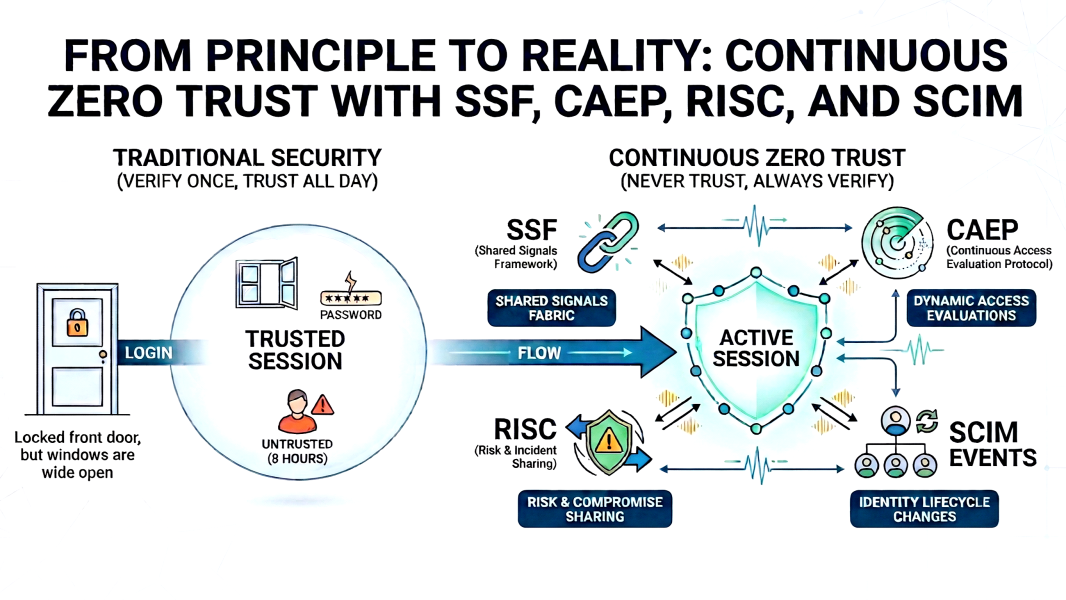
A practical breakdown of how SSF, CAEP, RISC, and SCIM Events work together to close the gap between Zero Trust as a principle and Zero Trust as a functioning architecture.
Stop asking if you can build. Start asking if you should. A framework to help identity and security teams make better build vs buy decisions by evaluating strategic necessity, execution capability, and total risk.
Practical strategies for maintaining immutable identifier architecture internally while working within SaaS platform constraints that require email as the primary identifier.
Email addresses as identifiers create security risks, audit gaps, and technical debt. Learn the three-layer approach to proper identity management.
The future isn’t incremental. AI agents require transaction-level authorization. Zero Trust demands continuous verification. CAEP provides the infrastructure for both—and what’s coming in the next 3-5 years.
From direct IdP connections to centralized event hubs—understand the architecture patterns that work at scale, how to design effective policies, and avoid common implementation pitfalls.
From contractor termination to session revocation in under 3 minutes. See exactly how CAEP events flow through your systems and why different applications respond differently to the same security event.
A contractor’s access ends at 5 PM, but their sessions stay active for hours. This isn’t a bug—it’s how federation works. CAEP fixes the structural problem nobody talks about.